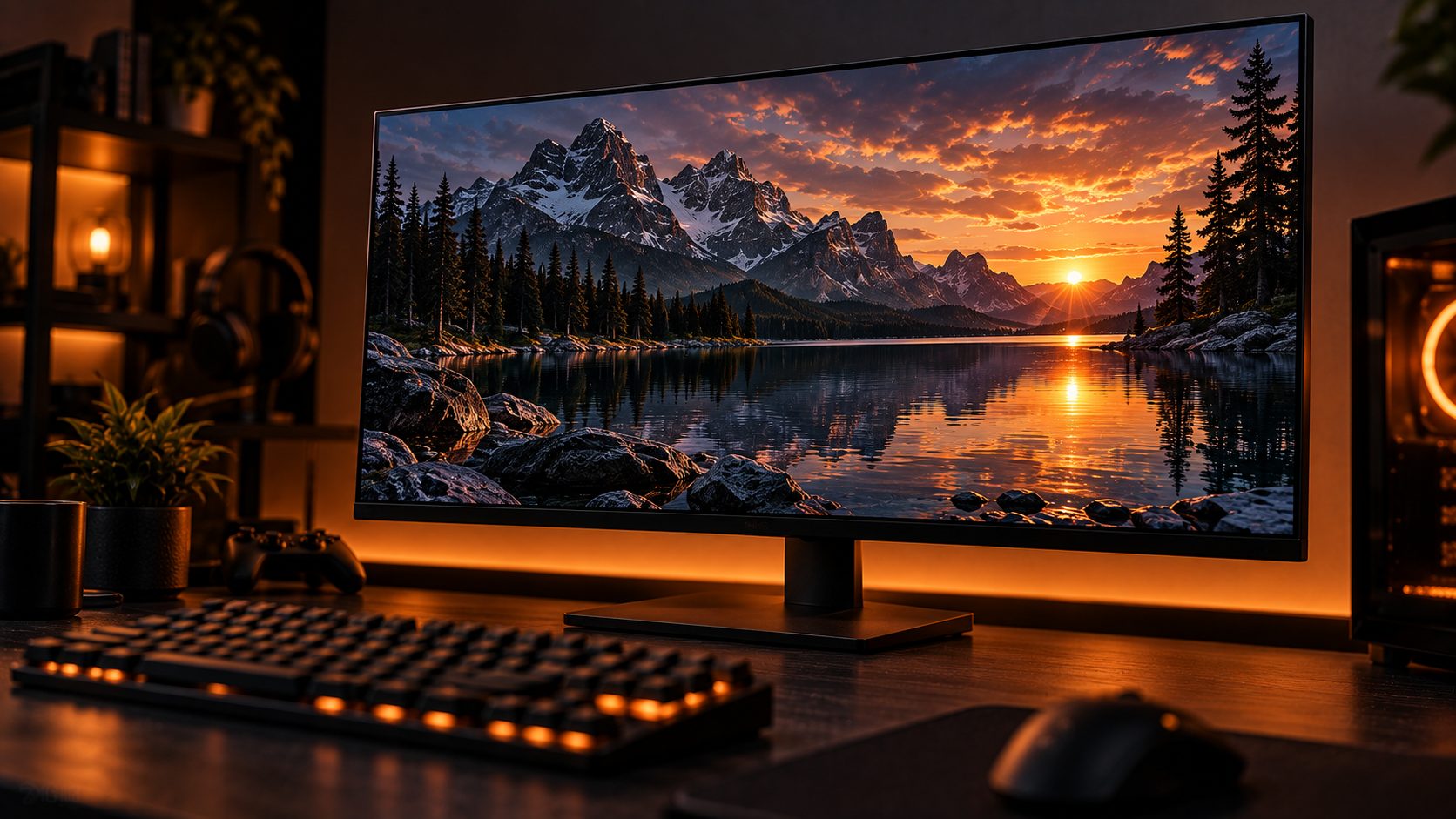
1440p sits in the genuine sweet spot for gaming monitors — sharper than 1080p, without demanding the GPU horsepower 4K needs to hit high frame rates. In 2026, OLED has become the standard for the top tier, but IPS and Mini-LED panels still make strong cases at lower prices. We researched five 1440p gaming monitors worth buying in 2026. If you want the fundamentals first, our gaming monitor buying guide covers panel types, refresh rate, and HDR in more depth.
Quick Answer
- Best Overall: ASUS ROG Swift OLED PG27AQWP-W — a 540Hz tandem OLED panel with the best motion performance available
- Best for Console/PS5: LG 27GS93QE UltraGear — OLED, 240Hz, and HDMI 2.1 with VRR
- Best Mini-LED/HDR: KTC M27T6S — 1,152 local dimming zones and DisplayHDR 1000
- Best Value: AOC Q27G41ZE — 240Hz (overclockable to 260Hz) Fast IPS for around $150–170
- Best Budget: Dell G2724D — 165Hz IPS with full ergonomic adjustment for around $150
1440p Gaming Monitors Compared
| Product | Best For | Panel | Refresh Rate | HDR | Price |
|---|---|---|---|---|---|
| ASUS ROG Swift PG27AQWP-W | Overall | Tandem WOLED | 540Hz (720Hz at 720p) | HDR500 | ~$1,099 |
| LG 27GS93QE UltraGear | Console / PS5 | OLED | 240Hz | DisplayHDR True Black 400, HDR10+ | ~$800 |
| KTC M27T6S | Mini-LED / HDR | Mini-LED IPS, 1,152 zones | 200Hz (OC 210Hz) | DisplayHDR 1000 | ~$300 |
| AOC Q27G41ZE | Value | Fast IPS | 240Hz (OC 260Hz) | HDR10 | ~$150–170 |
| Dell G2724D | Budget | Fast IPS | 165Hz | DisplayHDR 400 | ~$150 |
1. ASUS ROG Swift OLED PG27AQWP-W — Best Overall
540Hz at 1440p is the fastest refresh rate on a monitor this sharp available today, made possible by a 4th-generation tandem WOLED panel — and a dual-mode switch drops to 720p for up to 720Hz when raw frame rate matters more than resolution, on top of genuinely excellent HDR and color coverage for an OLED gaming panel.
- Panel: 4th Gen Primary RGB Tandem WOLED, 27″ (26.5″ viewable)
- Refresh rate: 540Hz at 1440p, dual-mode up to 720Hz at 720p
- Response time: 0.02ms
- Connectivity: 2x HDMI 2.1, 1x DisplayPort 2.1
- Color: 99% DCI-P3 coverage, HDR500
- Price: around $1,099
Who it’s for: competitive players and enthusiasts who want the fastest, sharpest panel available and can justify the price. Who should skip it: anyone gaming primarily on console — the LG below is built more specifically around HDMI 2.1 console use cases at a lower price.
Our overall pick: the fastest 1440p panel available, with flagship OLED image quality to match.
Check Price on Amazon (coming soon)2. LG 27GS93QE UltraGear — Best for Console/PS5
LG pairs OLED image quality with a full HDMI 2.1 port and VRR support, which matters directly for PS5 — that connection is what lets the console push 1440p at up to 120Hz with variable refresh rate, rather than being capped by an older HDMI version.
- Panel: OLED, 27″ (26.5″ viewable)
- Refresh rate: up to 240Hz, VRR via AMD FreeSync Premium Pro and NVIDIA G-Sync Compatible
- Response time: 0.03ms
- HDR: DisplayHDR True Black 400, HDR10+
- Connectivity: HDMI 2.1, DisplayPort
- Price: around $800
Who it’s for: PS5 owners (including hybrid PC/console setups) who want OLED quality with confirmed HDMI 2.1 and VRR support. Who should skip it: PC-only players chasing the absolute highest refresh rate — the ASUS above more than doubles it.
Our pick for console and PS5: OLED quality with the HDMI 2.1 and VRR support that actually matters on console.
Check Price on Amazon (coming soon)3. KTC M27T6S — Best Mini-LED/HDR
Mini-LED backlighting with 1,152 individually controlled local dimming zones gets remarkably close to OLED-level contrast in bright scenes, without OLED’s burn-in risk — and DisplayHDR 1000 certification means genuinely bright, punchy highlights, all at a fraction of the OLED picks’ price.
- Panel: Mini-LED IPS, 1,152 local dimming zones
- Refresh rate: 200Hz, overclockable to 210Hz
- HDR: DisplayHDR 1000
- Response time: 1ms MPRT
- Price: around $300
Who it’s for: buyers who want HDR that actually looks like HDR, without paying OLED prices or worrying about burn-in. Who should skip it: anyone who wants OLED’s per-pixel contrast in dark scenes — Mini-LED narrows the gap but doesn’t fully close it.
Our pick for Mini-LED and HDR: 1,152 dimming zones and DisplayHDR 1000 well below OLED pricing.
Check Price on Amazon (coming soon)4. AOC Q27G41ZE — Best Value
240Hz used to be a premium spec; the Q27G41ZE brings it — overclockable to 260Hz — to a Fast IPS panel for well under $200, with a genuinely quick 0.3ms MPRT response time that keeps fast motion clean.
- Panel: Fast IPS, 27″
- Refresh rate: 240Hz native, overclockable to 260Hz over DisplayPort
- Response time: 0.3ms MPRT
- HDR: HDR10, 300 nits peak brightness
- Price: around $150–170
Who it’s for: buyers who want the highest frame rate per dollar and don’t need HDR to be a highlight. Who should skip it: anyone who wants real HDR contrast — 300 nits is enough to carry an “HDR10” label but won’t look dramatically different from SDR.
Our value pick: 240Hz-plus performance on a Fast IPS panel for well under $200.
Check Price on Amazon (coming soon)5. Dell G2724D — Best Budget
165Hz is still plenty for the vast majority of games and players, and the G2724D pairs it with full height, tilt, swivel, and pivot adjustment — ergonomics that some pricier monitors skip — at one of the lowest prices for a legitimate 1440p Fast IPS panel.
- Panel: Fast IPS, 27″
- Refresh rate: 165Hz over DisplayPort, 144Hz over HDMI
- HDR: DisplayHDR 400
- Ergonomics: full height, tilt, swivel, and pivot adjustment
- Price: around $150
Who it’s for: buyers who want a genuinely solid 1440p monitor at the lowest reasonable price, with proper ergonomic adjustment included. Who should skip it: competitive players chasing 240Hz or higher — 165Hz is the ceiling here.
Our budget pick: a legitimate 1440p Fast IPS panel with full ergonomics at one of the lowest prices around.
Check Price on Amazon (coming soon)How We Selected These
We selected these five monitors based on manufacturer specifications, published technical reviews (including RTINGS, Tom’s Hardware, and PC Gamer), and current US retail pricing as of September 2026. We have not physically tested these monitors ourselves. Monitor pricing moves often, especially around sales — treat the figures above as a typical range. We’ll update this list as new generations replace these models.
1440p Gaming Monitor FAQ
Is 1440p better than 4K for gaming?
Not objectively better, but often the smarter choice — 1440p needs roughly half the GPU power of 4K to hit the same frame rate, so it’s easier to pair with a high refresh rate without an extremely expensive graphics card. 4K still wins on outright sharpness if you have the GPU to drive it.
Do I need HDMI 2.1 for PS5 at 1440p?
Yes, if you want VRR and higher refresh rates above 60Hz. Older HDMI 2.0 ports cap out at lower bandwidth, which limits refresh rate and can disable variable refresh rate entirely. The LG 27GS93QE on this list confirms full HDMI 2.1 support specifically for this reason.
Is Mini-LED worth it over standard IPS?
If HDR content and contrast matter to you, yes — a Mini-LED panel with hundreds of local dimming zones, like the KTC M27T6S, produces noticeably deeper blacks and brighter highlights than a standard IPS panel’s single backlight. For SDR gaming alone, the difference is much less noticeable.
Final Thoughts
1440p remains the resolution where high refresh rates, strong HDR, and reasonable pricing all genuinely coexist. Pick OLED if outright image quality and motion clarity matter most and you can afford it, Mini-LED if you want most of that HDR impact for less, and a solid Fast IPS panel if frame rate per dollar is the priority.
This site may contain affiliate links to Amazon.com. See our Affiliate Disclaimer for details.